A brain tumor can be a frightening diagnosis to hear. But the truth is, catching it early makes a significant difference in treatment outcomes. Knowing what to look for can help you take action at the right time – before symptoms worsen.
Brain tumors do not always announce themselves dramatically. Often, the early signs are subtle and easy to dismiss. In this article, we walk you through the most important early warning signs of a brain tumor, what they feel like, and when you should speak to a doctor.
Why Early Detection Matters
Brain tumors come in many types – benign (non-cancerous) and malignant (cancerous). Both can press against brain tissue and disrupt normal function. Early detection allows doctors to monitor or treat the tumor before it causes lasting damage to the brain.
If you notice any unusual changes in how your body or mind works – and these changes persist for more than a week or two – it is worth getting checked. Do not wait for symptoms to become severe.
Common Early Signs of Brain Tumor
Here are the most commonly reported early warning signs:
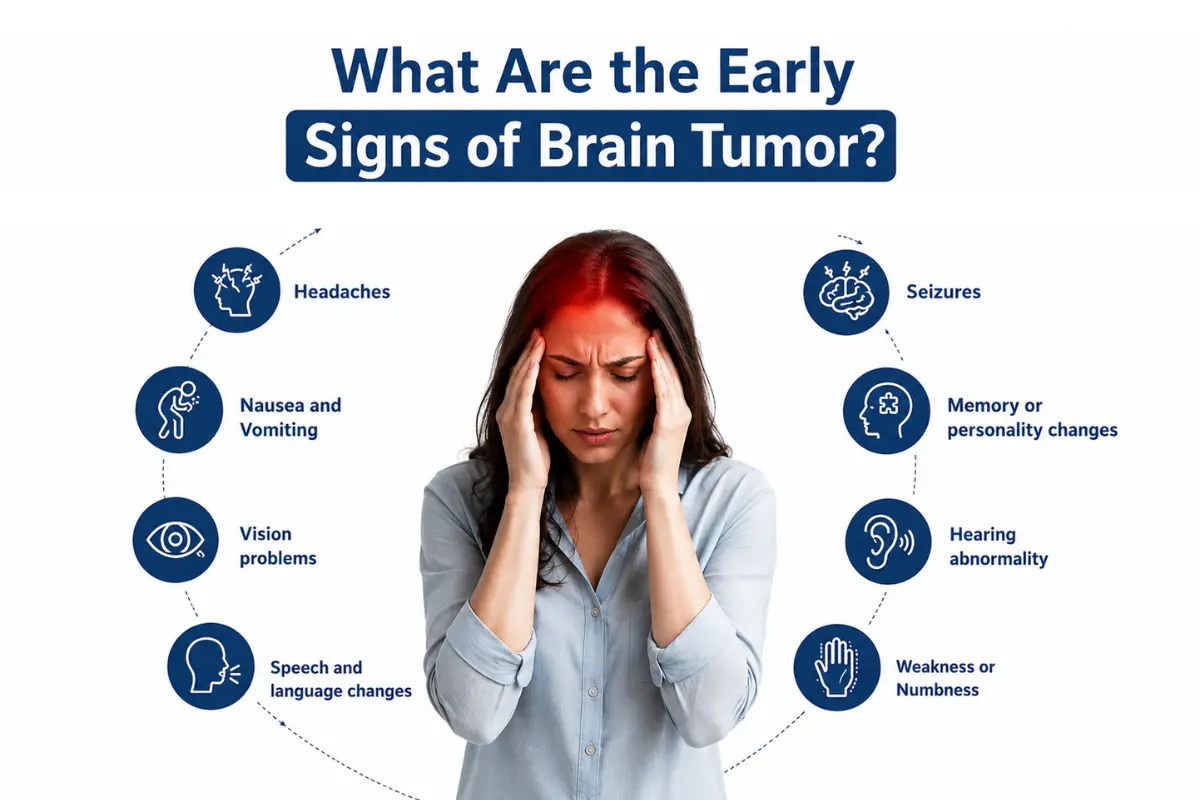
1. Headaches – Persistent or worsening headaches
One of the most reported early signs. These headaches are often worse in the morning, may wake you up at night, and do not respond well to common pain relief medication. They can feel like pressure deep inside the head.
2. Nausea and Vomiting – Nausea and vomiting
Often connected to the morning headaches, nausea or vomiting without an obvious cause – especially in the absence of digestive illness – can be an early indicator.
3. Vision Problems – Blurred or double vision
Tumors near the optic nerves or occipital lobe can affect vision. You may notice blurred or double vision, or even partial loss of sight.
4. Speech and Language Changes – Difficulty with speech or understanding words
Slurring words, difficulty forming sentences, or struggling to understand what others say can be an early neurological sign.
5. Seizures –Seizures
A new-onset seizure in an adult with no prior history is considered a red flag symptom. Seizures occur because tumors can disrupt electrical signals in the brain.
6. Cognitive and Personality Shifts – Memory lapses, confusion, or personality changes
Forgetting familiar names, becoming easily confused, or behaving differently from your usual self may suggest a tumor affecting the frontal or temporal lobe.
7. Weakness or Numbness – Weakness or numbness in limbs
One-sided weakness in the arm or leg, or unexplained numbness, can indicate a tumor pressing on motor or sensory pathways.
Early Signs at a Glance
The table below summarizes common early symptoms, the brain region typically involved, and what you might notice day to day.
| Early Sign | Brain Region Affected | What You May Notice |
| Persistent Headaches | Increased intracranial pressure | Morning headaches, pain on waking |
| Seizures | Cerebral cortex | Sudden convulsions, blank staring |
| Vision Changes | Occipital lobe / optic nerve | Blurred, double, or partial vision loss |
| Speech Difficulty | Temporal / frontal lobe | Slurred speech, word-finding issues |
| Memory or Personality Changes | Frontal or temporal lobe | Forgetfulness, mood shifts |
| Limb Weakness or Numbness | Motor / sensory cortex | One-sided weakness, tingling |
| Nausea / Vomiting | Increased intracranial pressure | Morning nausea without stomach illness |
Signs That Need Immediate Attention
Some symptoms call for urgent medical care. Seek immediate help if you or someone around you experiences:
- A sudden, extremely severe headache described as the ‘worst headache of your life’
- Loss of consciousness or fainting
- A first-time seizure
- Sudden inability to speak or understand speech
- Sudden vision loss in one or both eyes
These symptoms can also indicate other serious conditions like stroke or brain bleed. Either way, they require emergency evaluation.
Who Is at Risk?
- While brain tumors can affect anyone, certain factors may increase the risk:
- Family history of brain tumors or certain genetic conditions
- Previous radiation exposure to the head
- Age – some types are more common in adults over 50
- Weakened immune system
Having risk factors does not mean you will develop a brain tumor. It simply means staying aware of any changes and discussing them with your doctor.
When Should You See a Doctor?
See a doctor promptly if:
- Headaches are new, persistent, and unusual for you
- You have had a seizure for the first time
- You notice changes in vision, speech, or memory that have no clear cause
- Symptoms appear gradually but worsen over days or weeks
Your doctor may refer you for an MRI scan or CT scan to get a clearer picture of what is happening inside the brain. Early imaging can catch problems that are small and more treatable.
Conclusion
Experiencing one or two of these symptoms does not automatically mean you have a brain tumor. Many of these signs – like headaches or memory lapses – are common and can be caused by stress, lack of sleep, or other health issues.
However, when symptoms are persistent, worsening, or occurring together, they deserve medical attention. Staying aware of your body is one of the most powerful things you can do for your health.
If you ever feel something is ‘off’ – trust that feeling and speak to a healthcare professional. Early action leads to better outcomes.
Disclaimer: This article is for informational purposes only and does not replace professional medical advice. Always consult a qualified healthcare provider for diagnosis and treatment.