Your body talks to you long before a serious illness takes hold. The question is whether you’re listening. Here are 25 signs and symptoms worth paying attention to, and what they could mean.
Why Paying Attention to Symptoms Matters
Many serious health conditions, from heart disease to certain cancers, develop silently over time. By the time obvious symptoms appear, the condition may have already progressed. Recognizing early warning signs and symptoms gives you and your doctor a head start, often leading to:
- Simpler, less invasive treatment options
- Better long-term outcomes
- Lower healthcare costs
- Real peace of mind
| Note: When to Seek Emergency Care. Some symptoms on this list should never wait for a scheduled appointment. Call emergency services or get to an ER immediately if you experience chest pain, sudden numbness or weakness on one side of the body, difficulty breathing, sudden vision loss, or confusion that comes on suddenly. |
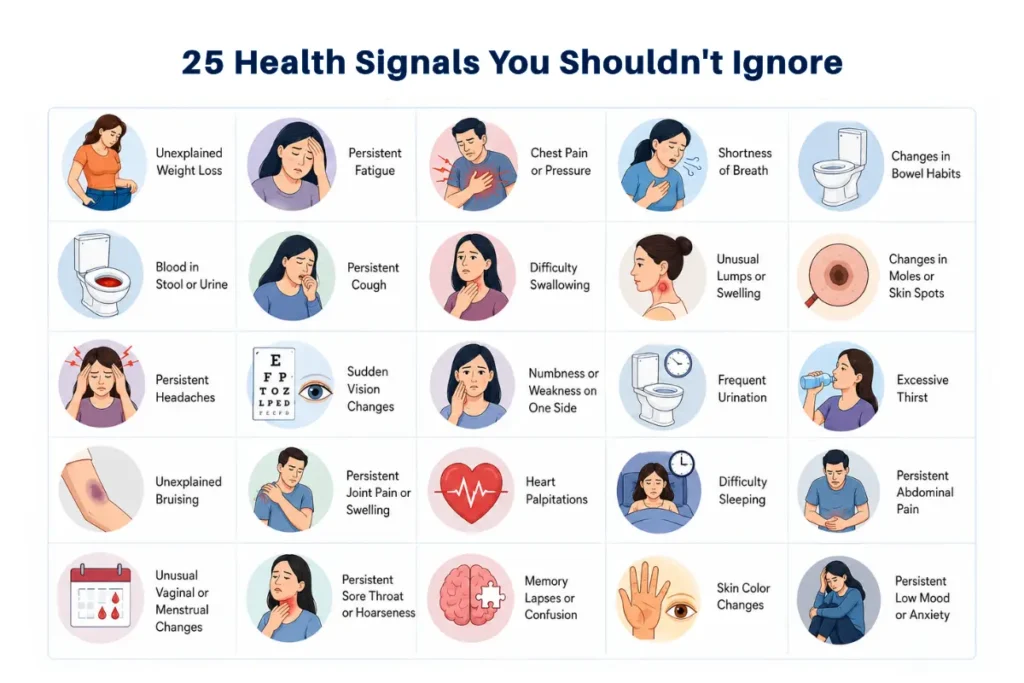
The 25 Signs and Symptoms, Explained
1. Unexplained Weight Loss
Losing weight without trying, especially more than 5% of your body weight over six to twelve months, can signal an underlying issue. Get checked if:
- Your clothes are suddenly loose
- You haven’t changed your diet or exercise routine
- The weight loss continues for several weeks
2. Persistent Fatigue
Everyone feels tired occasionally. But exhaustion that lingers for weeks despite adequate sleep could point to anemia, thyroid dysfunction, depression, or other underlying conditions needing evaluation.
3. Chest Pain or Pressure
Chest discomfort is one of the most important symptoms of heart problems never to ignore, especially when accompanied by shortness of breath, sweating, or pain radiating to the arm or jaw. Even mild but recurring chest pressure deserves urgent medical attention. Understanding which heart tests to take for chest pain can help ensure timely diagnosis and treatment.
4. Shortness of Breath
Struggling to catch your breath during normal activities or waking up breathless at night can indicate heart or lung conditions. This symptom should never be dismissed as simply being out of shape.
5. Changes in Bowel Habits
Watch for changes lasting more than a few weeks, including:
- Persistent diarrhea or constipation
- A noticeable change in stool shape or frequency
These can be early indicators of digestive issues, including colorectal concerns.
6. Blood in Stool or Urine
Any visible blood, even a small amount, warrants a prompt medical check. While it can stem from minor causes like hemorrhoids, it can also signal more serious conditions that require prompt medical evaluation and early diagnosis.
7. Persistent Cough
A cough lasting more than three weeks should be evaluated, particularly if it:
- Produces blood
- Comes with chest pain
- Occurs in a smoker or someone with a family history of lung disease
8. Difficulty Swallowing
Trouble swallowing food or liquids, or a sensation that food is getting stuck, can point to issues in the esophagus or throat, even if it happens only occasionally.
9. Unusual Lumps or Swelling
New lumps under the skin, whether in the breast, neck, armpit, or groin, should always be examined by a doctor. Most lumps turn out to be benign, but early evaluation rules out anything serious.
10. Changes in Moles or Skin Spots
Keep an eye on moles using the ABCDE rule, a classic set of skin cancer warning signs:
- Asymmetry
- Border irregularity
- Color changes
- Diameter growth
- Evolving shape
11. Persistent Headaches
Occasional headaches are normal, but see a doctor for frequent or severe headaches, a sudden, severe headache of your life, or headaches paired with vision changes or confusion. Persistent, unusual headaches are also among the early signs of a brain tumor worth discussing with your doctor.
12. Sudden Vision Changes
Blurred vision, double vision, or sudden vision loss should be treated as a medical emergency. These can be linked to stroke, diabetes complications, or eye conditions requiring immediate care.
13. Numbness or Weakness on One Side
Sudden numbness, weakness, or drooping on one side of the face or body is a classic stroke symptom. Remember the acronym FAST:
- Face drooping
- Arm weakness
- Speech difficulty
- Time to call emergency services
14. Frequent Urination
Needing to urinate much more often than usual, especially alongside excessive thirst, can be an early sign of diabetes. Reviewing the early signs and symptoms of diabetes can help you catch it early and prevent long-term complications.
15. Excessive Thirst
Paired with frequent urination, unusual thirst that doesn’t go away even after drinking water is another important indicator of blood sugar imbalance worth discussing with your doctor.
16. Unexplained Bruising
Bruises that appear without any known injury, or that take unusually long to heal, may point to blood clotting issues or other underlying conditions.
17. Persistent Joint Pain or Swelling
Ongoing joint pain, stiffness, or swelling, particularly if it’s symmetrical, affecting both knees or both hands for example, can be an early sign of autoimmune conditions like rheumatoid arthritis.
18. Heart Palpitations
Feeling like your heart is racing, fluttering, or skipping beats, especially when it happens frequently or is accompanied by dizziness, should be discussed with a healthcare provider.
19. Difficulty Sleeping
Chronic insomnia or disrupted sleep patterns can be more than just an inconvenience. It may be tied to:
- Stress or anxiety
- Sleep apnea
- Other health conditions affecting your overall wellbeing
20. Persistent Abdominal Pain
Ongoing stomach pain that doesn’t resolve with usual remedies deserves proper evaluation, as it can stem from digestive issues, gallbladder problems, or other internal conditions.
21. Unusual Vaginal or Menstrual Changes
Talk to a doctor about:
- Irregular periods
- Unusually heavy bleeding
- Bleeding between cycles or after menopause
These can indicate hormonal imbalances or other reproductive health concerns.
22. Persistent Sore Throat or Hoarseness
A sore throat or hoarse voice lasting more than two to three weeks, without a cold or infection to explain it, should be checked, particularly for those who smoke.
23. Memory Lapses or Confusion
Occasional forgetfulness is normal, but frequent memory lapses, confusion, or difficulty completing familiar tasks can be early signs worth discussing with a doctor, especially in older adults.
24. Skin Color Changes
Get evaluated for:
- Yellowing of the skin or eyes (jaundice)
- Unusual paleness
- Bluish discoloration of lips and fingertips
25. Persistent Low Mood or Anxiety
Emotional wellbeing matters just as much as physical health. Prolonged sadness, loss of interest in activities, or ongoing anxiety that interferes with daily life are signs and symptoms of mental health issues that deserve compassionate, professional support.
Quick Reference Table: Symptoms at a Glance
Use this table as a fast reference guide to the 25 symptoms, their possible causes, and the recommended next step.
| Symptom | Possible Underlying Cause | Recommended Action |
| Unexplained weight loss | Metabolic, thyroid, or malignancy-related causes | See a doctor |
| Persistent fatigue | Anemia, thyroid dysfunction, depression | See a doctor |
| Chest pain or pressure | Heart disease, angina | Emergency care |
| Shortness of breath | Heart or lung conditions | Urgent care |
| Changes in bowel habits | Digestive or colorectal issues | See a doctor |
| Blood in stool or urine | Hemorrhoids, infection, kidney or colorectal concerns | Urgent care |
| Persistent cough (3+ weeks) | Respiratory infection, lung disease | See a doctor |
| Difficulty swallowing | Esophageal or throat issues | See a doctor |
| Unusual lumps or swelling | Cysts, infection, or tumor growth | Urgent care |
| Changes in moles or skin spots | Skin cancer (per ABCDE rule) | See a doctor |
| Persistent headaches | Migraine, hypertension, neurological issue | See a doctor |
| Sudden vision changes | Stroke, diabetes complications, eye conditions | Emergency care |
| Numbness or weakness on one side | Stroke (FAST symptoms) | Emergency care |
| Frequent urination | Diabetes, urinary tract issues | See a doctor |
| Excessive thirst | Blood sugar imbalance | See a doctor |
| Unexplained bruising | Clotting disorders | Urgent care |
| Persistent joint pain or swelling | Autoimmune conditions like rheumatoid arthritis | See a doctor |
| Heart palpitations | Arrhythmia, anxiety, thyroid issues | See a doctor |
| Difficulty sleeping | Stress, sleep apnea, other conditions | See a doctor |
| Persistent abdominal pain | Digestive issues, gallbladder problems | See a doctor |
| Unusual vaginal or menstrual changes | Hormonal imbalance, reproductive health concerns | See a doctor |
| Persistent sore throat or hoarseness | Chronic infection or throat condition | See a doctor |
| Memory lapses or confusion | Cognitive decline, neurological changes | See a doctor |
| Skin color changes | Jaundice, anemia, circulation issues | Urgent care |
| Persistent low mood or anxiety | Mental health conditions | See a doctor |
When Should You See a Doctor?
A good rule of thumb: if a symptom is severe, sudden, or persists for more than two to three weeks without explanation, it’s time to get it checked. Trust your instincts; you know your body better than anyone.
- See a doctor soon for: fatigue, mild joint pain, changes in bowel habits, persistent cough
- Seek urgent care for: unexplained bruising, lumps, vision changes, blood in stool or urine
- Go to the ER immediately for: chest pain, sudden numbness or weakness, severe shortness of breath, sudden confusion
Final Thoughts: Listen to Your Body
Your body rarely stays silent when something is wrong. The key is learning to recognize its signals early and responding with care rather than fear. Awareness isn’t about assuming the worst with every ache or twinge; it’s about giving yourself the best possible chance at early diagnosis, effective treatment, and long-term health.
If you’ve noticed any of these signs and symptoms in yourself or a loved one, don’t wait for them to worsen. Reach out to a healthcare professional and get the clarity you deserve.
For clearer, easy-to-understand health insights, explore more articles on signsandsymptoms.in and take the next step toward informed, confident health decisions.