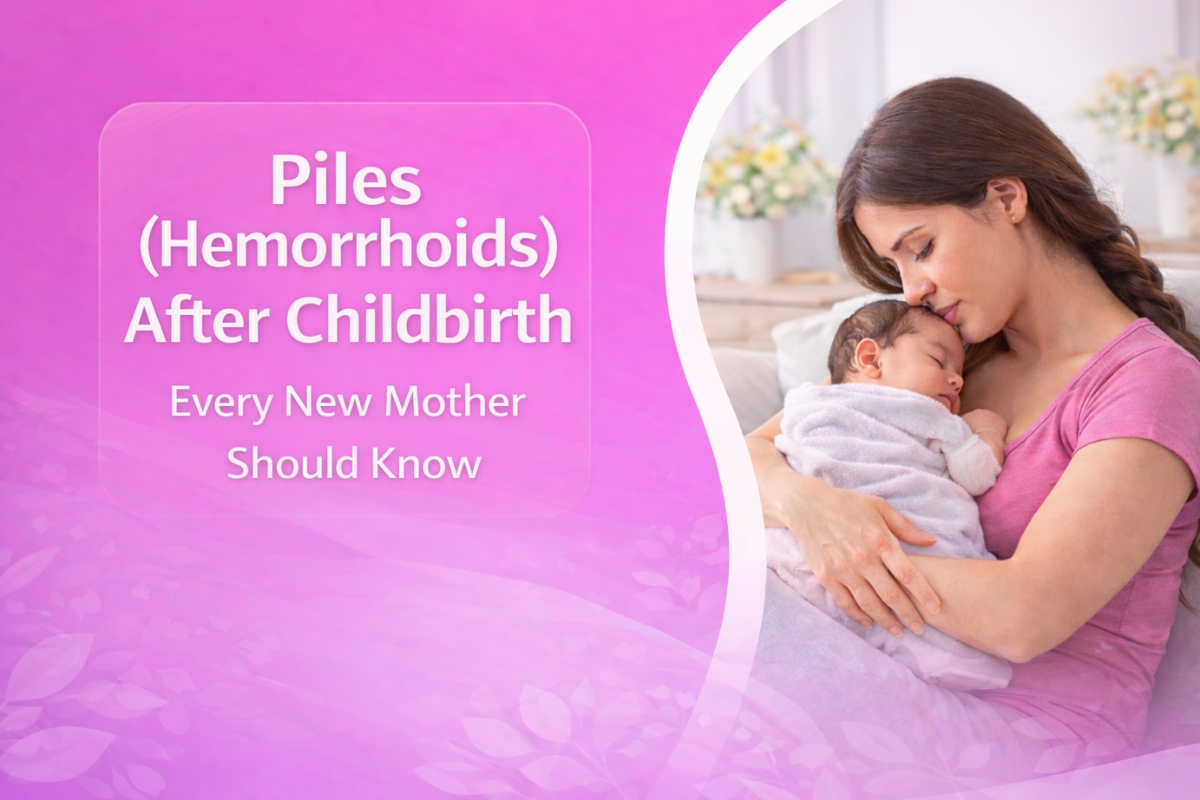
A Complete Awareness Guide for New Mothers
Why Many Women Face This Problem After Childbirth
After childbirth, a woman’s body goes through many physical and emotional changes. While most attention is given to the baby, many mothers silently struggle with health issues that are rarely talked about openly. One such common but uncomfortable problem is piles, also known as hemorrhoids, after delivery.
Many women feel embarrassed to discuss this condition. Some assume it is “normal” and must be tolerated. Others ignore early signs due to fear, tiredness, or lack of awareness. However, understanding the signs and symptoms of piles after delivery can help new mothers seek timely medical advice and avoid unnecessary pain.
Hemorrhoids after childbirth are very common, and in most cases, they are manageable and temporary when addressed early.
What Are Postpartum Hemorrhoids?
Hemorrhoids are swollen veins around the anus or inside the rectum. These veins normally help control bowel movements. However, when they become swollen and irritated, they can cause pain, discomfort, and bleeding.
When hemorrhoids develop during pregnancy or after childbirth, they are called postpartum hemorrhoids.
Types of Hemorrhoids
There are two main types:
1. Internal Hemorrhoids
- Located inside the rectum
- Usually painless
- May cause bleeding during bowel movements
- Often not visible from outside
2. External Hemorrhoids
- Located around the anus
- Can be painful
- May appear as a small lump or swelling
- Often cause itching and discomfort
Many women notice hemorrhoids after delivery, even if they did not feel any symptoms during pregnancy.
Why Do Hemorrhoids Appear After Delivery?
During pregnancy, the growing uterus puts pressure on the veins in the lower body. Hormonal changes also relax blood vessel walls. During childbirth, especially with pushing, this pressure increases suddenly.
After delivery:
- The pressure reduces slowly
- Healing tissues are sensitive
- Constipation is common
All these factors together can lead to hemorrhoids.
Signs and Symptoms of Piles After Delivery
Understanding early symptoms helps prevent worsening of the condition.
Common Symptoms
Most new mothers experience one or more of the following:
- Pain or discomfort around the anus
- Itching or irritation in the anal area
- Swelling or a small lump near the anus
- Pain while sitting
- Discomfort during bowel movements
These symptoms may be mild at first and are often ignored.
Symptoms That Need Attention
Some symptoms indicate that medical advice is needed:
- Bright red blood during or after bowel movements
- Increasing pain that does not improve
- A hard, painful lump near the anus
- Swelling that becomes more painful
Bleeding after delivery can be frightening. While hemorrhoids are a common cause, bleeding should never be ignored.
Symptoms Timeline: How Hemorrhoids Progress After Delivery
Early Days After Delivery
- Mild pain or pressure sensation
- Slight discomfort while passing stools
- Occasional itching
At this stage, many women think it is part of normal recovery.
Weeks After Delivery
- Pain becomes more noticeable
- Difficulty sitting comfortably
- Bleeding during bowel movements
- Visible swelling or lump
If ignored, symptoms can worsen.
If Hemorrhoids Are Left Untreated
- Severe pain
- Thrombosed hemorrhoids (blood clot inside hemorrhoid)
- Increased swelling
- Difficulty in daily activities
Early awareness helps prevent this stage.
Piles After Normal Delivery vs C-Section Delivery
Many women believe that hemorrhoids only happen after normal vaginal delivery. This is not true.
Piles After Normal Vaginal Delivery
Common causes include:
- Strong and prolonged pushing during labor
- Pressure on pelvic veins
- Straining during delivery
Women who have long labor or multiple deliveries are more prone.
Piles After C-Section Delivery
Even after a cesarean section, hemorrhoids are common.
Reasons include:
- Pressure from pregnancy still affects veins
- Reduced movement after surgery
- Pain medications causing constipation
- Fear of straining during bowel movements
✔️ Important: A C-section does not protect against hemorrhoids.
What Causes Hemorrhoids After C-Section Delivery?
Many women are surprised to develop piles after a C-section. The causes include:
1. Pregnancy Pressure
The uterus presses on pelvic veins for months, weakening them.
2. Constipation
Painkillers and reduced physical movement slow bowel movements.
3. Dehydration
New mothers often drink less water while caring for the baby.
4. Delayed Bowel Movements
Fear of pain after surgery causes women to delay passing stools.
These factors together increase pressure on rectal veins.
Hemorrhoids During Pregnancy vs After Delivery
Understanding the difference helps in awareness.
| During Pregnancy | After Delivery |
| Increased blood volume | Healing tissues |
| Hormonal relaxation of veins | Constipation |
| Pressure from growing uterus | Straining during bowel movements |
In many cases, pregnancy-related hemorrhoids improve after delivery, but some persist or worsen.
Visual Understanding of Hemorrhoids (Educational Only)
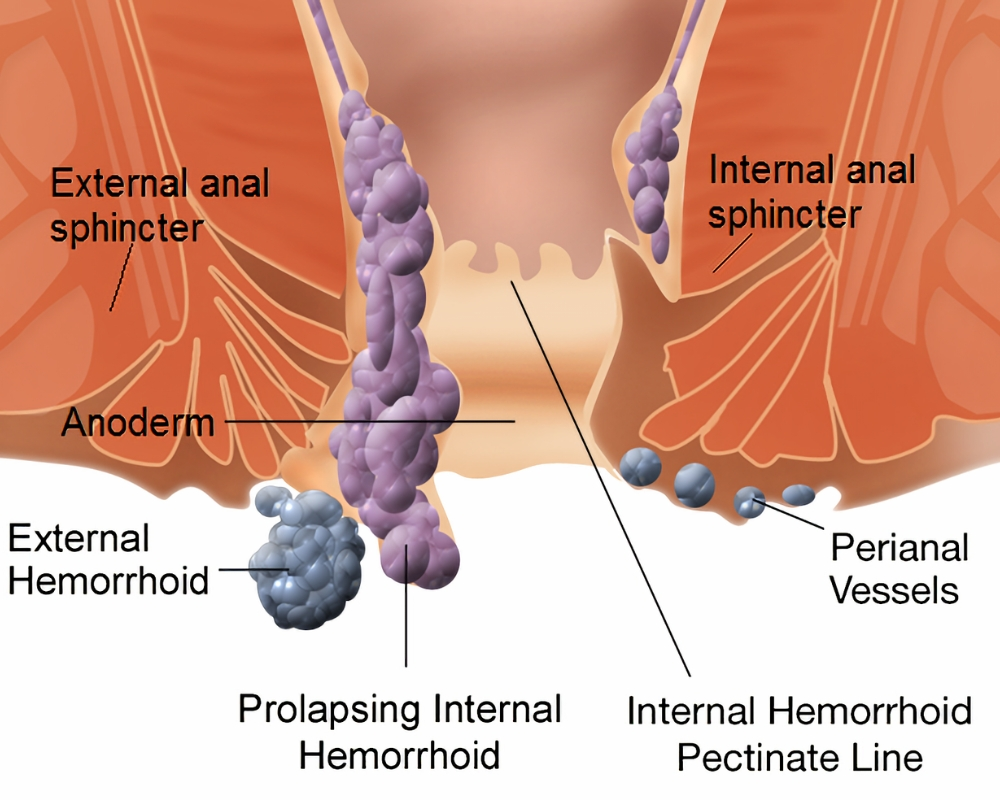
Note: Images are for educational purposes only. Actual appearance may vary from person to person.
When Should a New Mother See a Doctor?
Medical advice should be sought if:
- Bleeding continues for more than a few days
- Pain becomes severe or unbearable
- Swelling increases instead of improving
- Fever or discharge is present
- Symptoms do not improve within 1–2 weeks
Seeking help early can prevent complications and provide relief.
Emotional and Mental Impact of Postpartum Hemorrhoids
This topic is rarely discussed, but it is important.
Many women:
- Feel embarrassed
- Avoid talking about symptoms
- Fear bowel movements
- Suffer silently
Postpartum recovery is already physically and emotionally demanding. Hemorrhoids can add stress and anxiety. No woman should feel ashamed to discuss this condition with a doctor.
Frequently Asked Questions (FAQs)
Can piles go away after delivery?
Yes. In many women, hemorrhoids improve within weeks with proper care and medical guidance.
Are hemorrhoids common after C-section delivery?
Yes. Hemorrhoids are common even after C-section due to pregnancy-related pressure and postoperative constipation.
Is bleeding after delivery always due to piles?
No. Bleeding can have other causes. A doctor should always evaluate persistent bleeding.
How long do postpartum hemorrhoids last?
This varies. Mild cases may improve in days, while others may take weeks. Early medical advice helps faster recovery.
Can breastfeeding affect hemorrhoids?
Breastfeeding itself does not cause hemorrhoids, but dehydration during breastfeeding may worsen constipation if fluid intake is low.
Final Message for New Mothers
Postpartum hemorrhoids are common, manageable, and nothing to be ashamed of. Awareness of early signs and symptoms helps prevent discomfort and complications. Seeking timely medical advice can make recovery smoother and more comfortable during this important phase of life.
Medical Disclaimer:
This content is for educational and awareness purposes only. It is not intended to diagnose, treat, cure, or prevent any disease. Always consult a qualified healthcare professional for medical advice.