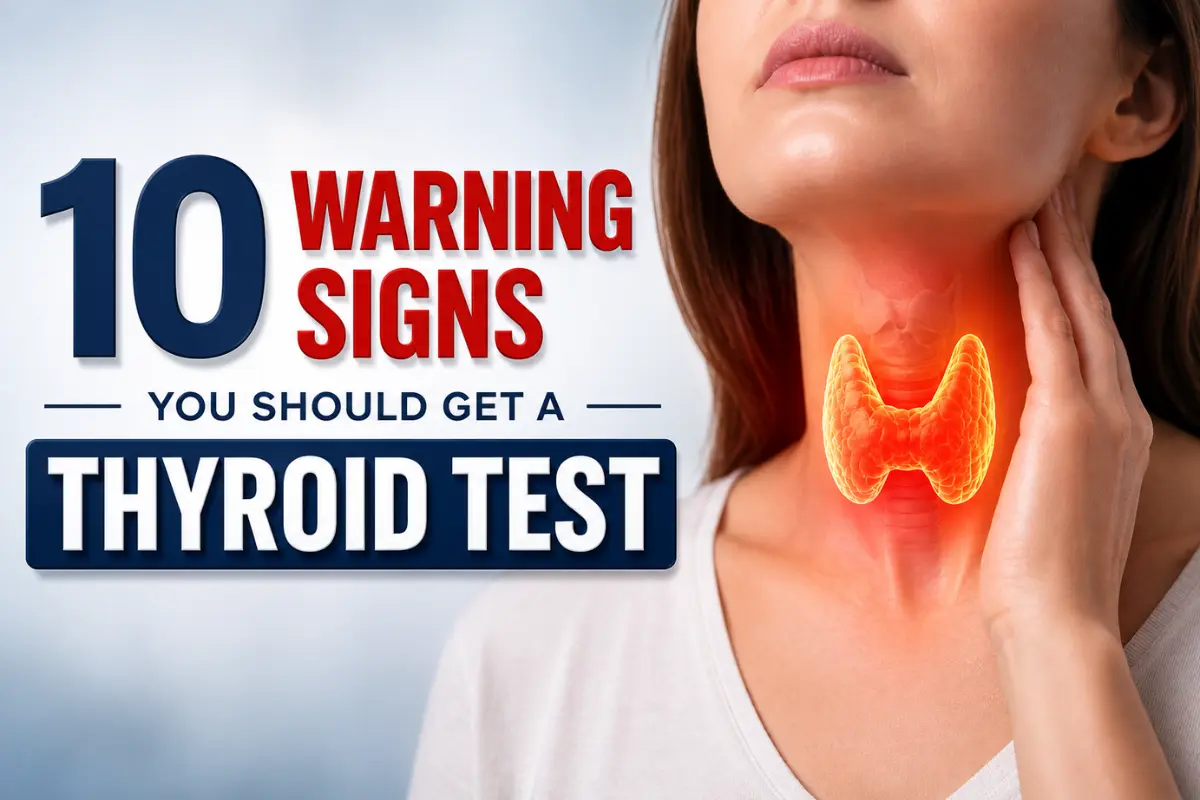
Your thyroid is a small, butterfly-shaped gland in your neck – but it plays a huge role in how your body functions every day. It controls your metabolism, energy levels, mood, weight, and much more. When it stops working properly, the effects can show up in ways you might not immediately connect to your thyroid.
Thyroid disorders are more common than most people realize, and they often go undiagnosed for months or even years. The signs can be subtle and easy to brush off. That is why knowing what to look for matters.
If you have been experiencing any of the symptoms below, it may be time to learn more about thyroid disease signs and symptoms and talk to your doctor about getting a thyroid test.
1. Unexplained Weight Changes
One of the most common red flags is a sudden change in your weight – without any obvious reason. If your diet and activity level have stayed the same but the scale keeps moving, your thyroid could be the cause.
- Weight gain may point to hypothyroidism – an underactive thyroid
- Weight loss without trying may indicate hyperthyroidism – an overactive thyroid
2. Constant Fatigue or Low Energy
Feeling tired all the time, even after a full night of sleep, is not something to ignore. An underactive thyroid slows down nearly every process in the body, which can leave you feeling completely drained throughout the day.
3. Feeling Too Cold or Too Hot
Your thyroid helps regulate your body temperature. If you constantly feel cold when others around you are comfortable – or if you sweat heavily and feel overheated often – your thyroid may not be doing its job properly.
| Note: Thyroid-related temperature sensitivity is different from general weather discomfort. If it is persistent and unexplained, it is worth getting checked. |
4. Mood Changes – Anxiety or Depression
Thyroid imbalances can directly affect your mental health. People with an overactive thyroid often experience anxiety, restlessness, or irritability. Those with an underactive thyroid may deal with persistent low mood, brain fog, or depression that does not respond well to standard treatment.
5. Hair Thinning or Hair Loss
Noticing more hair in your brush or in the shower drain than usual? Thyroid disorders can disrupt the hair growth cycle, leading to thinning hair, hair loss, or even loss of the outer edges of your eyebrows – a lesser-known but telling sign. In some women, thyroid symptoms after childbirth may also include unusual hair shedding, which is often mistaken as a normal postpartum change.
6. Irregular or Missed Periods
For women, thyroid problems can affect the menstrual cycle. Periods may become heavier, lighter, more frequent, or stop altogether. In fact, thyroid problems in young women are becoming increasingly common due to lifestyle changes, stress, hormonal imbalance, and poor sleep habits. If your cycle has changed without an obvious reason, such as stress or lifestyle shifts, thyroid function is worth investigating.
7. Swelling in the Neck
A visible swelling or lump in the front of your neck – known as a goiter – is one of the clearest physical signs that your thyroid may need attention. Even a feeling of tightness or difficulty swallowing should prompt a visit to your doctor.
8. Muscle Weakness or Joint Pain
Hypothyroidism can cause muscle weakness, aching joints, and general stiffness – symptoms that are often mistaken for signs of aging or general fatigue. If this is happening alongside other symptoms on this list, thyroid testing is a smart next step.
9. Changes in Heart Rate
Your thyroid has a direct impact on your heart. An overactive thyroid can cause a rapid or irregular heartbeat – sometimes described as palpitations. An underactive thyroid may slow your heart rate. Either way, unexplained heart rate changes should not be ignored.
10. Dry Skin and Brittle Nails
Thyroid hormones play a role in skin health and regeneration. Hypothyroidism can make the skin dry, rough, and flaky – and the nails may become brittle or break easily. If you have noticed these changes despite keeping up with skincare, your thyroid could be involved.
What Should You Do Next?
If you recognize two or more of these signs in yourself, do not wait. A simple blood test – called a TSH test – can check your thyroid hormone levels and give your doctor a clearer picture of what is going on.
Early detection makes a big difference. Most thyroid conditions are very manageable with the right treatment and guidance from a healthcare professional.
You can also explore common signs and symptoms of disease to understand better what your body may be trying to tell you.
| Note: This article is for informational purposes only and does not substitute professional medical advice. Always consult a qualified healthcare provider for diagnosis and treatment. |
Your health deserves attention – and your thyroid is no exception. If something feels off, trust that feeling and get it checked.