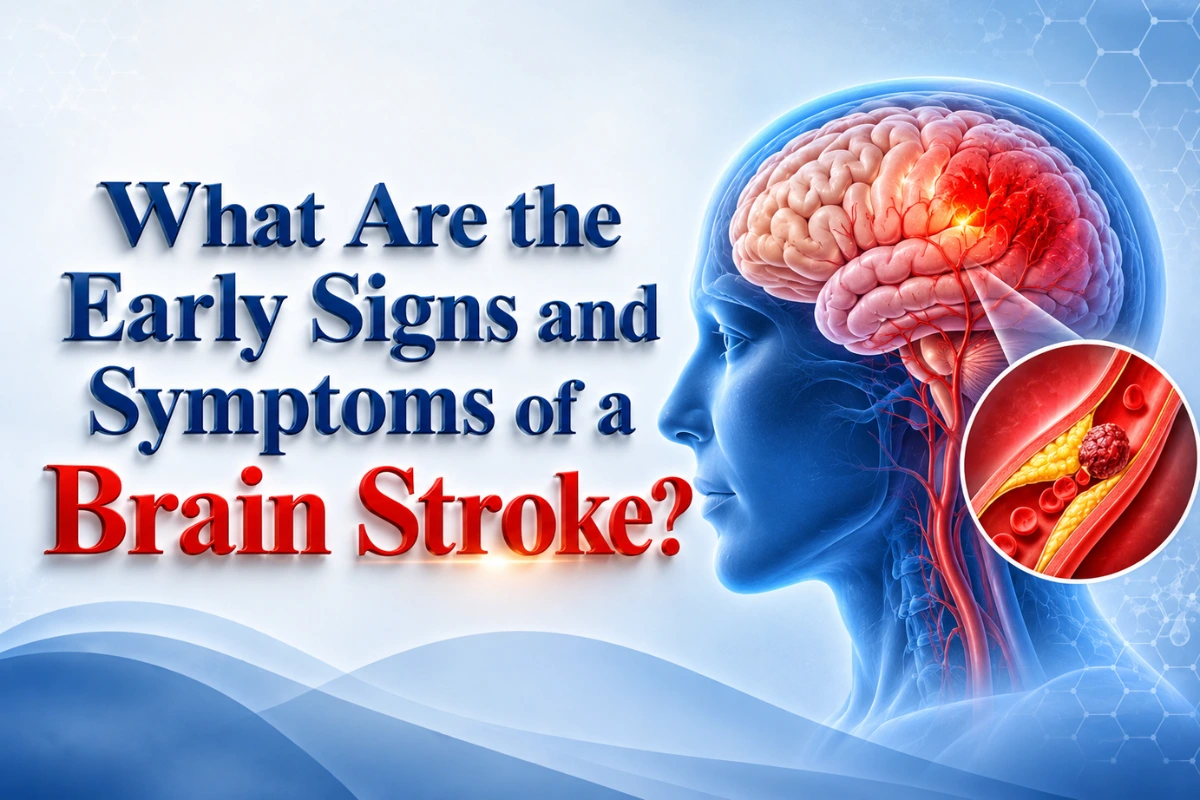
A brain stroke occurs when blood flow to part of the brain is blocked or a blood vessel in the brain bursts. Without a steady supply of oxygen, brain cells can begin to become damaged within minutes. Recognizing the warning signs and getting emergency medical care quickly can help reduce the risk of serious complications.
The early signs and symptoms of a brain stroke often appear suddenly. They may affect movement, speech, vision, balance, or awareness. Symptoms can vary from person to person, and someone does not need to experience every warning sign to be having a stroke.
If you notice even one sudden, unexplained stroke symptom in yourself or another person, seek emergency medical help immediately. Do not wait to see if it goes away.
What Are the Early Signs and Symptoms of a Brain Stroke?
The following warning signs can help you recognize a possible stroke. They are not a way to diagnose a stroke at home. If symptoms appear suddenly, emergency medical assessment is essential.
1. Sudden Numbness or Weakness on One Side
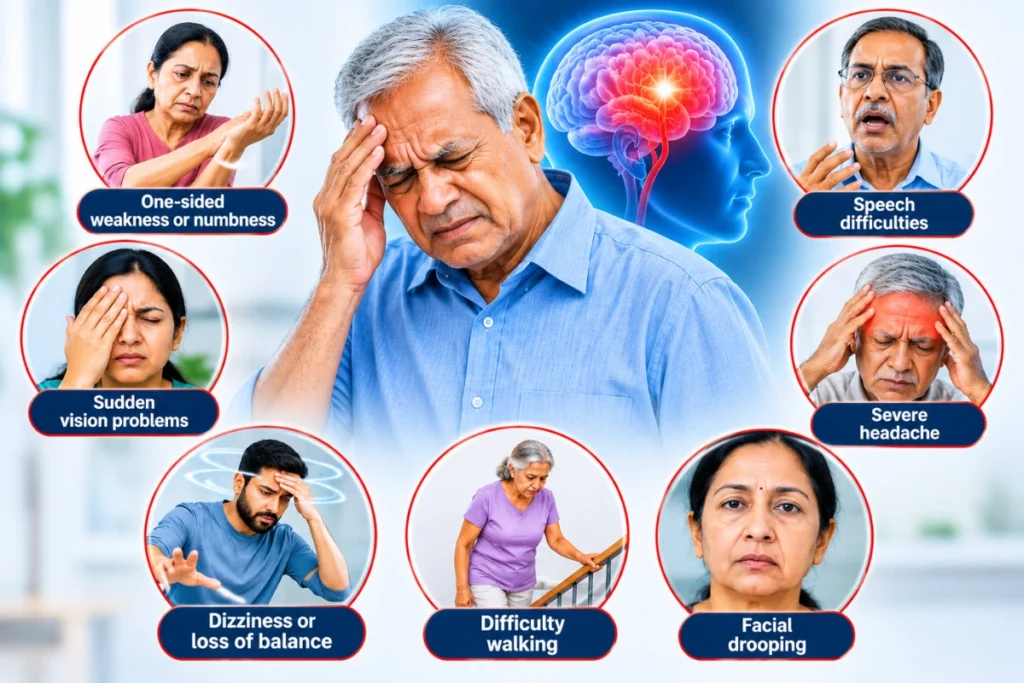
- What it looks or feels like: One arm, leg, or side of the body may suddenly feel weak, heavy, numb, or difficult to move. The person may struggle to hold an object or raise one arm.
- Why it may indicate a stroke: The brain controls movement and sensation. When an area of the brain is affected by a stroke, weakness or loss of sensation may occur on the opposite side of the body.
- What action should be taken: Call emergency services immediately if this weakness or numbness appears suddenly, even if it is mild or affects only one limb.
2. Difficulty Speaking or Understanding Speech
- What it looks or feels like: The person may slur words, struggle to form a sentence, use the wrong words, or have difficulty understanding what others are saying.
- Why it may indicate a stroke: A stroke can affect the parts of the brain responsible for language and communication. Sudden changes in speech or comprehension are important warning signs.
- What action should be taken: Seek emergency help immediately. Do not assume the person is tired, confused, or simply having trouble finding the right words.
The CDC’s stroke warning signs guide explains the sudden changes to watch for and why immediate action matters.
3. Sudden Vision Problems
- What it looks or feels like: Vision may suddenly become blurred, double, or reduced. The person may also lose vision in one eye or have difficulty seeing part of their surroundings.
- Why it may indicate a stroke: A stroke can affect the brain regions that process visual information or the pathways involved in vision.
- What action should be taken: Treat sudden, unexplained vision changes as a medical emergency, especially when they occur with dizziness, weakness, or speech difficulties.
4. Sudden Severe Headache
- What it looks or feels like: A person may experience a sudden, unusually severe headache, particularly one that starts abruptly and feels different from previous headaches.
- Why it may indicate a stroke: A sudden severe headache with no known cause can be a warning sign of bleeding in or around the brain, including a type of stroke.
- What action should be taken: Get emergency medical help immediately for a sudden, severe, unexplained headache. Do not wait for the pain to settle or attempt to diagnose the cause yourself.
5. Sudden Dizziness or Loss of Balance
- What it looks or feels like: The person may suddenly feel dizzy, unsteady, or as though the surroundings are moving. Standing, sitting upright, or walking may become difficult.
- Why it may indicate a stroke: A stroke affecting areas of the brain involved in balance and coordination can cause sudden dizziness or unsteadiness.
- What action should be taken: Seek emergency help if dizziness or loss of balance starts suddenly, particularly if it occurs with vision changes, weakness, or difficulty speaking.
6. Difficulty Walking or Poor Coordination
- What it looks or feels like: The person may stumble, veer to one side, have trouble walking straight, or suddenly struggle to coordinate their movements.
- Why it may indicate a stroke: A stroke can interfere with the brain’s ability to coordinate movement and maintain balance.
- What action should be taken: Do not encourage the person to walk around to test their balance. Call emergency services and help them remain safely seated or lying down while waiting for assistance.
7. Facial Drooping
- What it looks or feels like: One side of the face may appear uneven, or the person’s smile may look different from usual. One corner of the mouth may droop.
- Why it may indicate a stroke: A stroke can affect the nerves and brain areas responsible for controlling facial muscles, causing sudden weakness on one side of the face.
- What action should be taken: Ask the person to smile if it is safe to do so. If one side of the face droops suddenly, call emergency services immediately, even if there are no other obvious symptoms.
Quick Reference Table: Warning Signs of a Brain Stroke
| Warning Sign | What It May Look Like | What to Do |
|---|---|---|
| Weakness or numbness | Sudden difficulty moving or feeling one side of the body | Seek emergency help |
| Speech difficulties | Slurred words or trouble understanding speech | Call emergency services |
| Vision changes | Sudden blurred, double, or lost vision | Get immediate medical attention |
| Severe headache | Sudden, unusually severe headache with no known cause | Seek emergency care |
| Dizziness or balance problems | Sudden unsteadiness or loss of coordination | Call emergency services |
| Walking difficulties | Unexpected stumbling or trouble walking normally | Get emergency medical help |
| Facial drooping | One side of the face appears uneven | Call emergency services immediately |
Important: Stroke symptoms often begin suddenly, and even one warning sign is enough to seek emergency care. Do not wait for multiple symptoms to appear.
What Should You Do If You Suspect a Brain Stroke?
A suspected stroke is a medical emergency. Acting quickly gives medical professionals the opportunity to assess the person and determine which treatment may be appropriate.
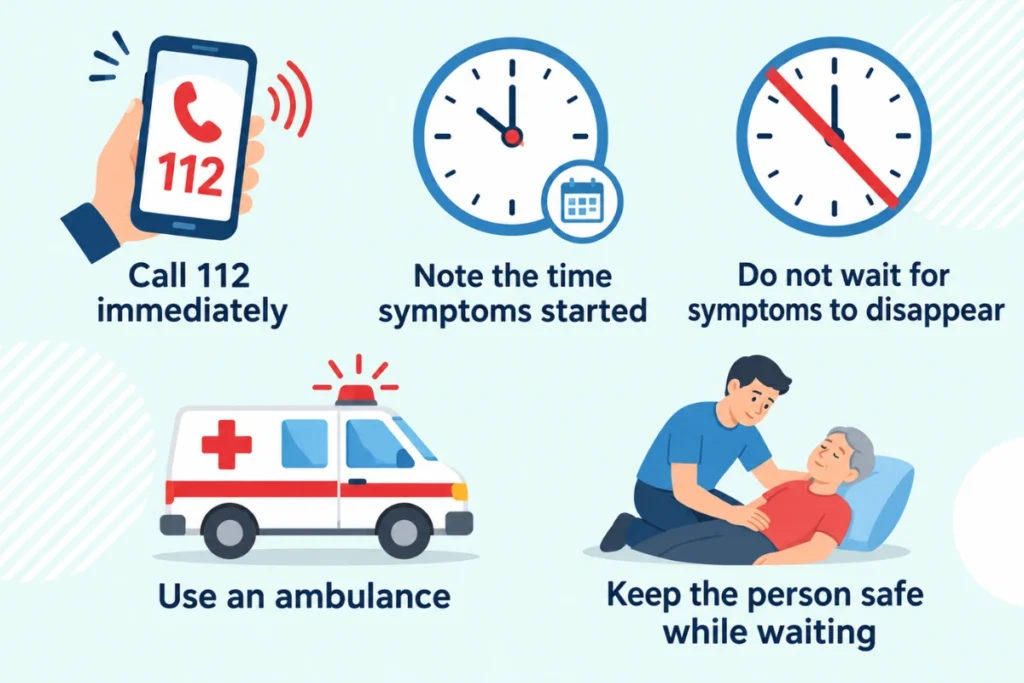
Follow these steps:
- Call emergency services immediately. In India, dial 112 for emergency assistance. Do not delay the call while searching for more symptoms or advice.
- Note when the symptoms began. If you do not know the exact start time, note when the person was last seen without symptoms. This information can help the medical team assess treatment options.
- Do not wait for symptoms to disappear. Symptoms that improve or go away may indicate a transient ischemic attack (TIA), sometimes called a warning stroke. A TIA also needs urgent medical assessment because it can signal a risk of a future stroke.
- Use an ambulance when available. Avoid driving the person yourself if emergency medical transport is available. Ambulance personnel can begin appropriate care and alert the receiving hospital.
- Keep the person safe while waiting. Help them sit or lie in a safe position, stay with them, and follow the emergency operator’s instructions. Do not give food, drink, or medication unless instructed by a medical professional.
Remember B.E. F.A.S.T.
The B.E. F.A.S.T. method can help you recognize common stroke warning signs:
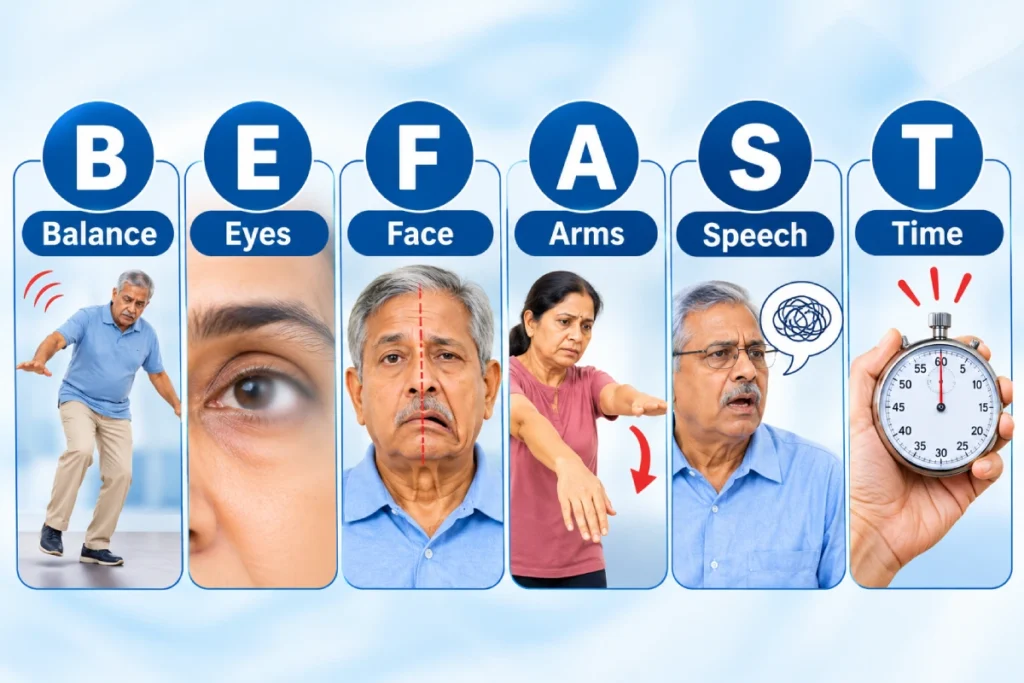
- B – Balance: Sudden loss of balance or coordination.
- E – Eyes: Sudden vision changes.
- F – Face: One side of the face droops.
- A – Arms: One arm becomes weak or drifts downward.
- S – Speech: Speech becomes slurred or difficult to understand.
- T – Time: Call emergency services immediately.
This checklist supports recognition, but it is not a diagnostic test. Do not delay seeking help if another sudden symptom suggests a stroke.
Frequently Asked Questions
1. What is the main cause of a stroke?
A stroke usually occurs when blood flow to part of the brain is blocked by a blood clot or when a blood vessel in the brain bursts. High blood pressure is a major risk factor for stroke.
2. What are the 5 warning signs of a stroke?
Five common warning signs include sudden facial drooping, weakness or numbness on one side of the body, difficulty speaking or understanding speech, sudden vision problems, and sudden dizziness or loss of balance. If any of these symptoms appear suddenly, call emergency services immediately.
3. What is the treatment for a stroke?
Stroke treatment depends on whether the stroke is caused by a blockage or bleeding in the brain. Treatment may include clot-dissolving medication, procedures to remove a clot, or treatment to control bleeding and reduce pressure. Immediate hospital care is essential because the appropriate treatment depends on the type of stroke and how quickly the person receives medical attention.
4. Can a person recover completely after a stroke?
Yes, some people recover fully or regain many of their abilities after a stroke. Recovery depends on factors such as the severity of the stroke, how quickly treatment begins, and the person’s response to rehabilitation.
Conclusion
Recognizing the early signs and symptoms of a brain stroke can help you respond quickly when every minute matters. Sudden weakness, facial drooping, speech difficulties, vision changes, severe headache, and balance problems should never be ignored.
If you notice any possible stroke symptoms in yourself or someone else, call emergency services immediately. For more information about warning signs and other health concerns, explore the health guides available on Signs and Symptoms.