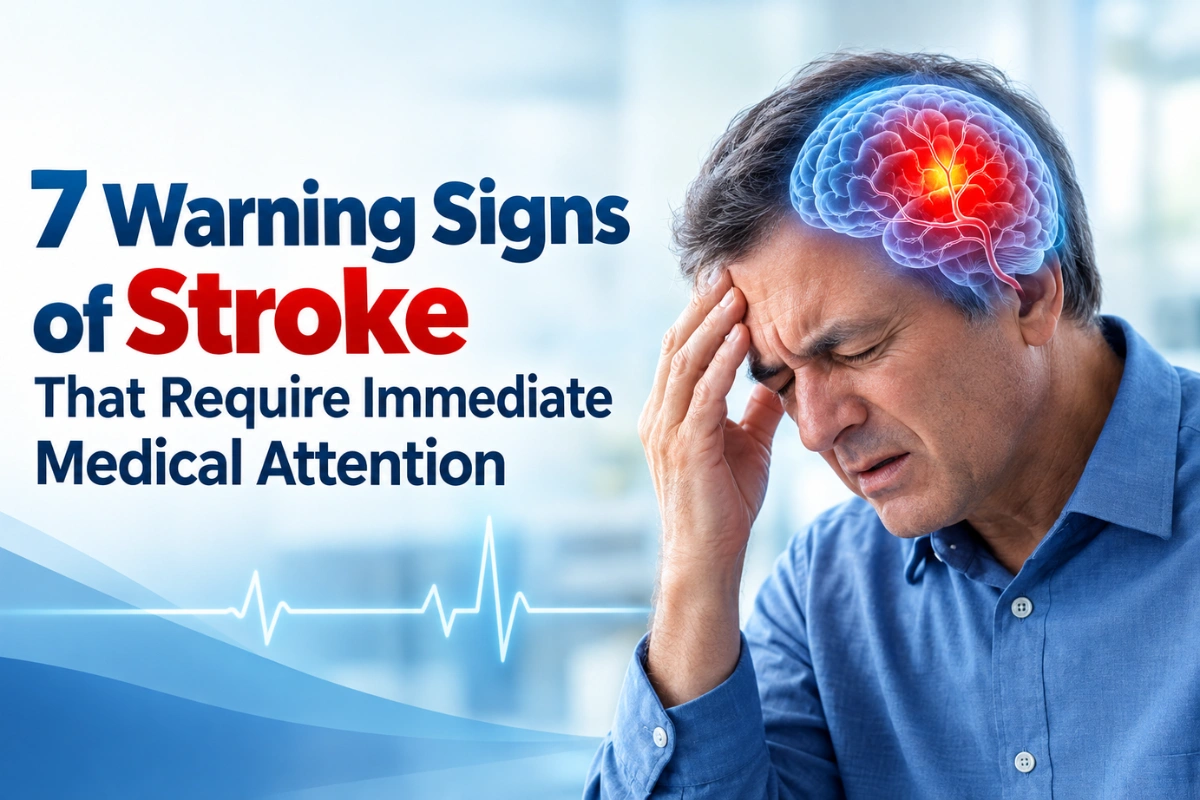
A stroke happens when blood flow to part of the brain is suddenly interrupted or reduced, cutting off the oxygen and nutrients brain cells need to survive. This can happen because of a blocked blood vessel or bleeding in the brain. According to the World Health Organization (WHO), stroke is a medical emergency that requires immediate treatment because a lack of blood flow can lead to brain cell death and serious complications.
When blood flow to the brain is interrupted, brain cells can become damaged or die, making rapid medical treatment critical.
7 Early Signs of Stroke That Require Immediate Attention
The American Stroke Association recommends learning the B.E. F.A.S.T. warning signs, which include sudden balance problems, vision changes, facial drooping, arm weakness, speech difficulties, and the need to act quickly.
1. Sudden Numbness or Weakness
- What it looks or feels like: Sudden numbness or weakness in the face, arm, or leg, especially on one side of the body, may make a limb feel heavy, tingly, or difficult to move.
- Why it may indicate a stroke: A stroke can disrupt brain pathways that control movement and sensation, often causing symptoms on one side of the body.
- What action should be taken: If weakness or numbness appears suddenly, especially on one side, treat it as a medical emergency and seek emergency medical help immediately.
2. Sudden Trouble Speaking or Understanding Speech
- What it looks or feels like: A person may suddenly slur their words, struggle to find the right words, speak unclearly, or have difficulty understanding what others are saying.
- Why it may indicate a stroke: A stroke can affect areas of the brain responsible for speech and language, causing sudden problems with speaking or understanding.
- What action should be taken: If speech suddenly becomes unclear or the person cannot understand simple words or sentences, seek emergency medical help immediately.
3. Sudden Vision Problems
- What it looks or feels like: Sudden blurred or double vision, or partial or complete loss of vision in one or both eyes, can be a warning sign of stroke.
- Why it may indicate a stroke: A stroke can affect the parts of the brain and blood vessels involved in vision, causing sudden changes in how a person sees.
- What action should be taken: Do not wait for sudden vision problems to improve on their own. Seek emergency medical attention, especially if other stroke symptoms are present.
4. Sudden Severe Headache
- What it looks or feels like: A sudden, severe headache that reaches maximum intensity within seconds or minutes may feel very different from a person’s usual headaches. It may also occur with nausea, vomiting, or reduced alertness.
- Why it may indicate a stroke: A sudden severe headache can occur with a hemorrhagic stroke, when a blood vessel in the brain ruptures and causes bleeding.
- What action should be taken: A sudden, unusually severe headache requires immediate medical evaluation. Do not wait for it to improve on its own.
5. Sudden Dizziness or Loss of Balance
- What it looks or feels like: A person may suddenly feel dizzy, unsteady, or as though the room is spinning. They may have difficulty standing or walking without support.
- Why it may indicate a stroke: A stroke affecting areas of the brain that control balance and coordination can cause sudden dizziness or loss of balance.
- What action should be taken: Sudden, unexplained dizziness or balance problems, particularly with other stroke symptoms, require immediate emergency medical attention.
6. Sudden Trouble Walking or Coordination Problems
- What it looks or feels like: A person may suddenly stumble, walk unsteadily, or have difficulty coordinating their arms and legs without an obvious cause.
- Why it may indicate a stroke: A stroke can disrupt the brain signals responsible for movement and coordination, making normal walking or other movements suddenly difficult.
- What action should be taken: If walking or coordination problems appear suddenly, treat them as a possible stroke and seek emergency medical help immediately.
7. Facial Drooping
- What it looks or feels like: One side of the face may suddenly droop or feel numb. The person’s smile may appear uneven, or they may have difficulty closing one eye.
- Why it may indicate a stroke: A stroke can affect the brain pathways that control facial muscles, causing weakness or drooping on one side of the face.
- What action should be taken: Ask the person to smile. If one side of the face droops or does not move normally, seek emergency medical help immediately.
What Should You Do If You Suspect a Stroke?
Stroke should be treated as a medical emergency, and the World Health Organization emphasizes that rapid care is essential when stroke is suspected.
Use the B.E. F.A.S.T. Method
The American Stroke Association recommends B.E. F.A.S.T. as an easy way to recognize the warning signs of stroke and know when to seek emergency help.
- B — Balance: Is there sudden dizziness, loss of balance, or difficulty walking?
- E — Eyes: Is there sudden blurred, double, or lost vision in one or both eyes?
- F — Face: Ask the person to smile. Does one side of the face droop or feel numb?
- A — Arms: Ask the person to raise both arms. Is one arm weak, numb, or drifting downward?
- S — Speech: Ask the person to repeat a simple phrase. Is their speech slurred, strange, or difficult to understand?
- T — Time: If any of these symptoms appear suddenly, call your local emergency number immediately and note the time the symptoms first appeared.
Additional steps to take
- Call your local emergency number immediately rather than driving to the hospital yourself, since emergency responders can begin evaluation and treatment en route.
- Note the exact time symptoms first appeared. This information helps medical teams determine appropriate treatment options.
- Keep the person calm, comfortable, and lying down with their head slightly elevated, if possible, while waiting for help to arrive.
- Do not give the person food, water, or medication, since swallowing may be impaired.
- Stay with the person and continue to monitor their symptoms until emergency responders arrive.
Frequently Asked Questions About Stroke Warning Signs
Can stroke warning signs come and go?
Yes. A transient ischemic attack (TIA), sometimes called a “mini-stroke,” can cause sudden stroke-like symptoms that may disappear after a short period. However, symptoms that go away should not be ignored. The American Stroke Association notes that TIA symptoms require urgent medical evaluation because a TIA can be a warning of a future stroke.
Are stroke symptoms different in men and women?
The main warning signs are usually similar. However, women may sometimes experience less typical symptoms such as sudden confusion, fatigue, or weakness. Any sudden, unexplained neurological change should be evaluated promptly.
How quickly should I seek help if I notice these signs?
Immediately. Stroke treatment is time-sensitive, and getting medical care quickly can improve outcomes. Do not wait for symptoms to disappear.
Can young or healthy people have a stroke?
Yes. Although stroke risk increases with certain factors, it can happen at any age. Recognizing the warning signs is important for everyone.
What is the difference between a stroke and a mini-stroke?
A transient ischemic attack (TIA) causes temporary stroke-like symptoms because of a brief interruption of blood flow to the brain. Although the symptoms may disappear, a TIA is still a medical emergency and can signal an increased risk of a future stroke. A stroke, meanwhile, can result in lasting brain damage.
Medical Disclaimer: This article is intended for general educational and informational purposes only. It is not a substitute for professional medical advice, diagnosis, or treatment. If you or someone else experiences possible stroke symptoms, seek emergency medical care immediately.
Conclusion
Recognizing the warning signs of stroke- sudden numbness or weakness, trouble speaking, vision changes, a severe headache, dizziness, coordination problems, and facial drooping- can help you or someone around you get help as quickly as possible. Because stroke treatment is most effective when given promptly, acting fast on these signs matters more than waiting to confirm what’s happening.
For clearer, easy-to-understand guides on recognizing symptoms and understanding common health conditions, explore more articles on Signs and Symptoms (signsandsymptoms.in), where the goal is always to help you make informed decisions about your health, one clear answer at a time.