Heart disease doesn’t usually start with a dramatic collapse. It starts small, with symptoms easy to miss or ignore. For men juggling work and family, these signs often get brushed aside.
The good news: heart disease symptoms in men tend to follow clear patterns. Spotting them early can mean the difference between a simple checkup and a medical emergency. Here’s what to watch for, why it happens, and what to do next.
Why Heart Disease Often Goes Unnoticed in Men
Heart disease remains one of the leading causes of death among men worldwide. Several factors make men particularly vulnerable:
- Men often develop heart disease at a younger age than women
- Classic symptoms like chest pain tend to appear more clearly in men, yet many still ignore them
- Cultural habits of “toughing it out” delay medical visits
- Risk factors like smoking, high blood pressure, and stress are common in working-age men
The encouraging part is that heart disease develops gradually. That means there’s usually a window of opportunity, weeks, months, or even years, where early signs appear before a major cardiac event occurs.
Early Warning Signs of Heart Disease in Men
Recognizing the signs of heart disease early gives you the best chance to manage risk factors before they turn into a medical emergency. Here are the most common early indicators to watch for.
1. Chest Discomfort or Pressure
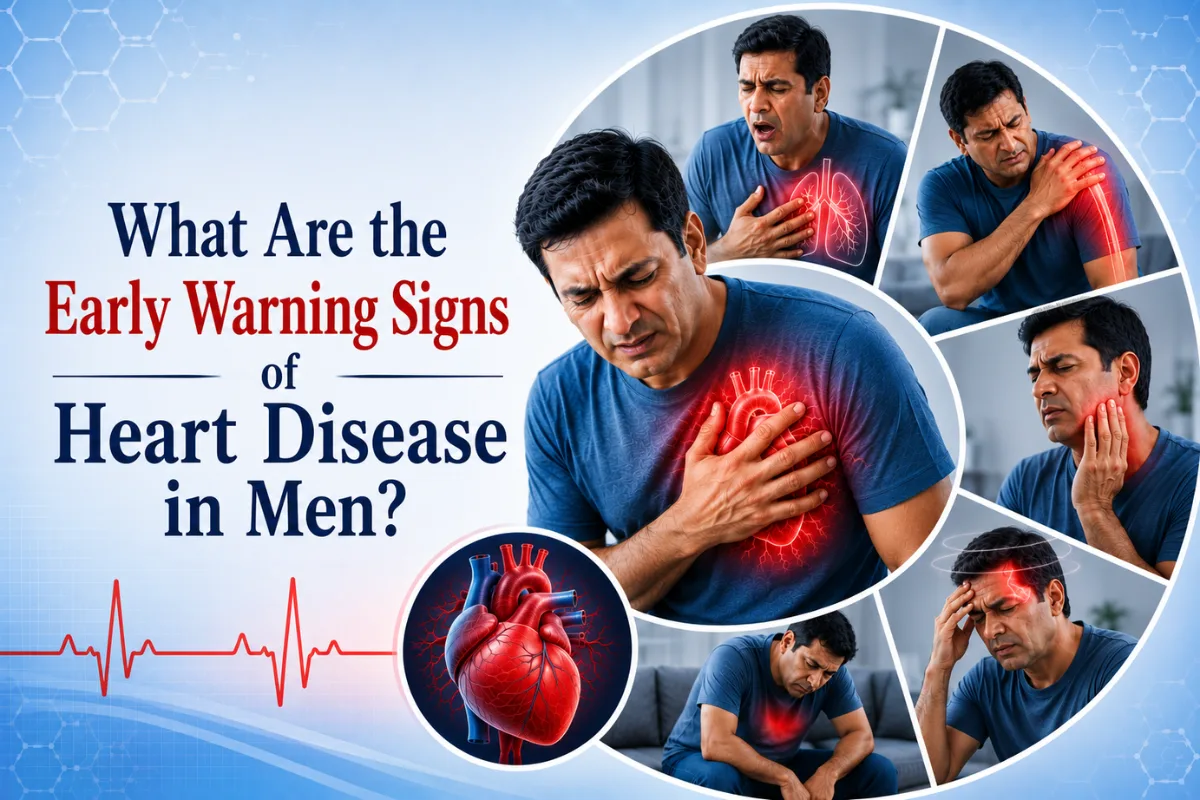
This is one of the most well-known heart disease symptoms in men. It may not always feel like sharp pain. Many describe it as tightness, heaviness, squeezing, or a burning sensation in the chest, especially during physical activity or emotional stress. This discomfort, known medically as angina, occurs when the heart muscle isn’t getting enough oxygen-rich blood.
Understanding which heart tests are recommended for chest pain can help identify the underlying cause sooner.
2. Shortness of Breath
Feeling breathless during activities that once felt easy, like climbing a flight of stairs or walking briskly, can be an early sign that the heart isn’t pumping as efficiently as it should. This symptom sometimes appears even without chest pain, which is why it’s often overlooked.
3. Unusual Fatigue
Persistent tiredness that doesn’t improve with rest is a subtle but important warning sign. When the heart struggles to circulate blood effectively, the body compensates by conserving energy, leaving you feeling drained even after a full night’s sleep.
4. Pain Radiating to the Arms, Jaw, Neck, or Back
Unlike what many expect, heart-related pain doesn’t always stay in the chest. It can radiate to the left arm, jaw, neck, shoulders, or upper back. This spreading discomfort is a classic but frequently misunderstood heart attack symptom in men.
5. Irregular Heartbeat
A heartbeat that feels like it’s racing, fluttering, or skipping can indicate an arrhythmia, a condition often linked to underlying heart disease. Occasional flutters may be harmless, but frequent or prolonged episodes deserve medical attention.
6. Swelling in the Legs, Ankles, or Feet
When the heart isn’t pumping blood effectively, fluid can build up in the lower body. This swelling, known as edema, is a common sign of heart failure and tends to worsen by the end of the day.
7. Dizziness or Lightheadedness
Sudden dizziness, especially when standing up or during physical exertion, can be linked to changes in blood pressure or heart rhythm. While occasional lightheadedness can have many causes, recurring episodes are worth discussing with a doctor.
8. Cold Sweats, Nausea, or Indigestion-Like Discomfort
Breaking into a cold sweat or feeling nauseated without a clear reason, particularly alongside chest discomfort, can accompany a cardiac event. These symptoms are sometimes mistaken for indigestion, which delays men from seeking timely medical attention.
Quick Reference: Early Warning Signs at a Glance
| Warning Sign | What It May Feel Like | Why It Matters |
| Chest discomfort or pressure | Tightness, squeezing, or heaviness in the chest, often during exertion | May indicate reduced blood flow to the heart (angina) |
| Shortness of breath | Feeling winded during routine activities like climbing stairs | Can signal the heart is struggling to pump efficiently |
| Fatigue | Unusual tiredness even after adequate rest | Early sign the heart is working harder than it should |
| Pain in arms, jaw, neck, or back | Discomfort that spreads beyond the chest | Common but often overlooked heart attack symptom in men |
| Irregular heartbeat | Fluttering, racing, or skipped beats | May point to arrhythmia linked to heart disease |
| Swelling in legs or ankles | Puffiness, especially by the end of the day | Could suggest the heart is not circulating blood effectively |
| Dizziness or lightheadedness | Sudden episodes without a clear cause | May reflect blood pressure or rhythm changes |
| Cold sweats or nausea | Breaking into a sweat or feeling sick without exertion | Sometimes accompanies chest pain during a cardiac event |
Heart disease is just one condition that can present with warning signs before becoming serious. Here are 25 signs and symptoms your body should never ignore to help you recognize when it’s time to seek medical attention.
Risk Factors That Increase the Likelihood of Heart Disease in Men
Recognizing symptoms is only part of the picture. Understanding your personal risk factors for heart disease helps you and your doctor take a proactive approach to prevention.
- High blood pressure (hypertension)
- High LDL cholesterol or low HDL cholesterol
- Smoking or tobacco use
- Diabetes or insulin resistance
- Obesity or a sedentary lifestyle
- Family history of heart disease
- Chronic stress and poor sleep quality
- Excessive alcohol consumption
| Good to Know: Preventive care matters. Annual health checkups can help identify heart disease risk factors early, allowing you to take action before complications develop. |
When to See a Doctor
It’s easy to dismiss occasional tiredness or a bit of breathlessness as simply “getting older” or “being out of shape.” However, certain patterns warrant a prompt visit to a healthcare provider:
- Chest discomfort that lasts more than a few minutes or returns repeatedly
- Shortness of breath during light activity or at rest
- Fatigue that interferes with daily life for more than a few weeks
- Any combination of chest pain, sweating, and nausea, which requires immediate emergency care
If you ever experience sudden, severe chest pain along with shortness of breath, sweating, or pain spreading to the arm or jaw, treat it as a medical emergency and seek immediate help. Early treatment during a heart attack significantly improves outcomes.
Simple Steps to Support Heart Health
Prevention plays a powerful role in reducing the risk of heart disease. Small, consistent changes often make the biggest difference over time.
- Get regular checkups to monitor blood pressure, cholesterol, and blood sugar levels
- Stay physically active with at least 150 minutes of moderate exercise per week
- Choose a heart-healthy diet rich in vegetables, whole grains, and lean protein
- Limit sodium, added sugar, and processed foods
- Quit smoking and reduce alcohol intake
- Manage stress through sleep, relaxation, and healthy work-life boundaries
Maintaining good heart health also means staying on top of routine screenings, including the essential health checkups every man needs at different stages of life.
Final Thoughts
Heart disease develops gradually, and its early warning signs are often subtle enough to overlook, especially for men balancing demanding schedules and daily pressures. Paying attention to changes like chest discomfort, breathlessness, fatigue, or an irregular heartbeat can help you catch problems early, when they’re most manageable.
Your heart works around the clock for you. Giving it the attention it deserves, through awareness, regular checkups, and timely medical care, is one of the most valuable things you can do for your long-term health.
Take Charge of Your Heart Health Today
Understanding the early signs of heart disease is the first step toward a healthier future. For clearer, easy-to-understand guides on symptoms, conditions, and everyday health concerns, visit signsandsymptoms.in and stay informed, one symptom at a time.