Most people picture a heart attack as sudden and dramatic. In reality, heart disease often builds quietly for years – through extra tiredness, breathlessness on the stairs, or a flutter in the chest.
Recognising these early signs does not mean assuming the worst every time you feel off – it means knowing what is worth mentioning to a doctor. This guide covers common symptoms, how they differ between men and women, and when to seek care.
The early signs and symptoms described above are consistent with guidance from the American Heart Association, which notes that heart-related warning signs can include chest discomfort, shortness of breath, fatigue, nausea, sweating, and discomfort in areas such as the arm, back, neck, jaw, or stomach.
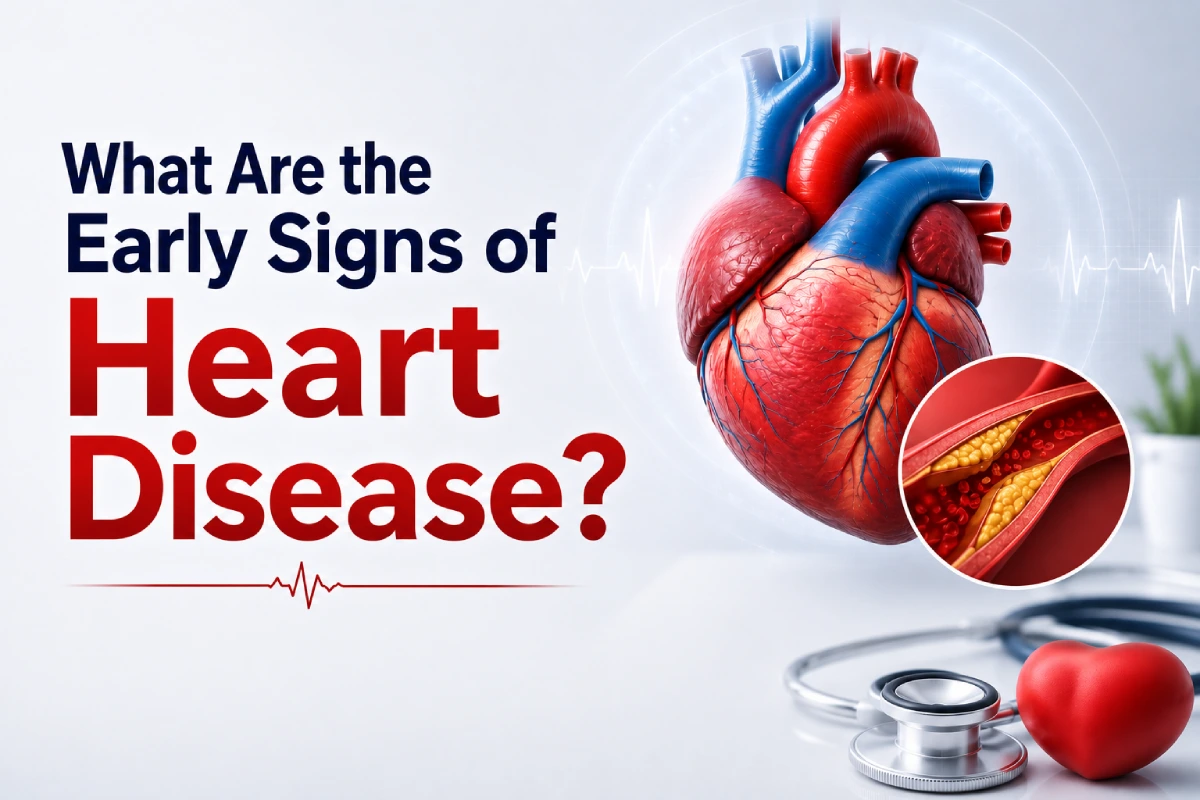
What Are the Early Signs of Heart Disease?
The early signs of heart disease typically include:
- Chest discomfort or a feeling of pressure or tightness
- Shortness of breath, even during light activity
- Unusual or persistent fatigue
- Dizziness or lightheadedness
- Heart palpitations – a racing, pounding, or fluttering feeling
- Sweating without a clear reason, such as heat or exercise
- Nausea or indigestion-like discomfort
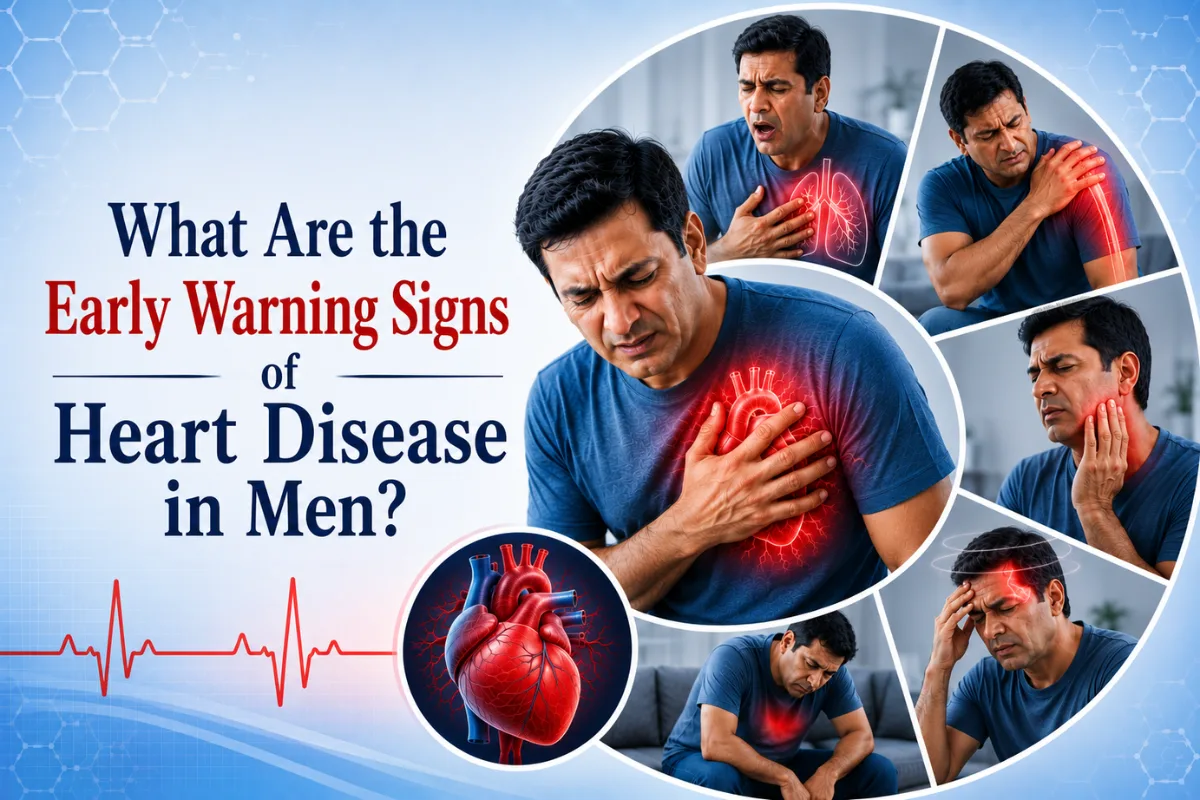
- Pain or discomfort in the arm, shoulder, back, neck, or jaw
- Swelling in the legs, ankles, or feet
Not everyone experiences these the same way – some notice one clear symptom, others feel several milder ones over time.
Early Symptoms of Heart Disease You Should Not Ignore
Heart disease risk factors include high blood pressure, high cholesterol, diabetes, smoking, obesity, physical inactivity, age, and family history. The National Heart, Lung, and Blood Institute (NHLBI) provides detailed guidance on these risk factors, diagnosis, and ways to reduce cardiovascular risk.
Chest Pain or Discomfort
This can feel like pressure or a dull ache rather than sharp pain. Discomfort that is severe, persistent, or paired with other symptoms deserves prompt attention.
Shortness of Breath
Breathlessness during everyday activities – stairs, brisk walking, or lying flat – can be an early clue the heart is working harder than it should.
Unusual Fatigue
This one is easy to dismiss. Tiredness that feels disproportionate to your activity level, or that lingers for days, is worth noting rather than brushing off.
Dizziness or Lightheadedness
Occasional dizziness has many harmless explanations, from dehydration to standing up too quickly. Frequent or unexplained episodes are worth discussing with a doctor.
Fast, Irregular, or Pounding Heartbeat
Palpitations can feel like your heart skipping a beat, fluttering, or racing. Brief episodes are usually harmless, but frequent or prolonged ones should be evaluated.
Swelling in the Legs or Ankles
When the heart does not pump efficiently, fluid can build up in the lower body – especially worth mentioning if paired with breathlessness or fatigue.
Pain in Other Parts of the Body
Heart-related discomfort does not always stay in the chest – pain in the arm, shoulder, back, neck, or jaw can be significant too.
What Does Heart Disease Feel Like?
There is no single feeling that defines heart disease. Some describe chest pressure, while others mainly notice breathlessness, fatigue, or dizziness with little chest involvement – which is part of why early signs are often overlooked.
Heart Disease Symptoms in Women
Women can experience the same common symptoms as men, including chest discomfort and shortness of breath. However, some women may also experience less typical symptoms such as unusual fatigue, nausea, vomiting, back or jaw discomfort, or shortness of breath without prominent chest pain.
Heart Disease Symptoms in Men
Men may experience classic heart-related symptoms such as chest pressure or discomfort, shortness of breath, sweating, and pain or discomfort that may spread to the arm, shoulder, back, neck, or jaw. However, symptoms can vary considerably from person to person.
Early Signs of Heart Disease vs Other Common Conditions
Many early symptoms overlap with far more common, less serious conditions. This table offers a general comparison for awareness – not a substitute for diagnosis.
| Symptom | May Be Linked to Heart Disease | Other Possible Causes |
| Chest discomfort | Angina or other heart problems | Acid reflux, muscle strain |
| Shortness of breath | Heart or circulation problems | Asthma, respiratory infections |
| Fatigue | Reduced heart function | Poor sleep, anemia, stress |
| Dizziness | Abnormal heart rhythm or blood pressure changes | Dehydration, low blood sugar |
| Palpitations | Arrhythmias | Anxiety, caffeine, certain medications |
When Should You See a Doctor About Heart Disease Symptoms?
Make an Appointment If:
- Symptoms keep returning or follow a pattern
- You experience unexplained breathlessness
- You notice persistent, unusual fatigue
- You have recurring palpitations
- You have known risk factors for heart disease
Seek Emergency Medical Help If:
- Chest pain or pressure is severe or does not go away
- Chest discomfort is paired with breathlessness, sweating, nausea, fainting, or pain spreading to the arm, back, neck, or jaw
- Symptoms come on suddenly or feel severe
Who Is at Higher Risk of Heart Disease?
Certain factors raise the likelihood of developing heart disease, including:
- High blood pressure
- High cholesterol
- Diabetes
- Smoking
- Obesity
- Physical inactivity
- Family history of heart disease
- Increasing age
- An unhealthy diet
How Is Heart Disease Diagnosed?
Diagnosis usually starts with a history review and physical exam, followed by tests such as:
- Blood tests
- ECG or EKG (electrocardiogram)
- Echocardiogram
- Stress testing or additional imaging, when appropriate
Can Heart Disease Be Prevented?
Not every case is preventable, but these habits support heart health:
- Eating a heart-healthy diet
- Staying physically active
- Avoiding smoking
- Managing blood pressure, cholesterol, and blood sugar
- Maintaining a healthy weight
- Attending recommended health checkups
Frequently Asked Questions
What is the first warning sign of heart disease?
There is no single first sign for everyone, but chest discomfort, breathlessness, and unusual fatigue are among the most commonly reported.
Can heart disease cause tiredness?
Yes. Fatigue that feels excessive or unexplained, especially when it lingers, can be an early sign the heart is not pumping efficiently.
Can heart disease cause shortness of breath?
Yes. Breathlessness during light activity, or even at rest in some cases, can indicate the heart is under strain.
What does heart-related chest pain feel like?
It is often described as pressure, tightness, or fullness rather than sharp pain, and may come and go or worsen with activity.
Are heart disease symptoms different in women?
Symptoms in women are often subtler, centring more on fatigue, nausea, or back and jaw discomfort rather than classic chest pain.
When should I see a doctor for possible heart disease?
If symptoms are recurring, unexplained, or paired with risk factors like high blood pressure or diabetes, it is worth scheduling an evaluation.
Conclusion
Experiencing one of these symptoms occasionally does not automatically mean heart disease – many overlap with everyday, less serious conditions. But persistent or combined symptoms are never worth ignoring. Paying attention to your body is one of the simplest ways to protect your long-term health.
For more patient-friendly guidance on recognising early warning signs, explore more health resources at Signs and Symptoms and take the next step toward informed, proactive care.